Prison Breakout!
- 4.4
- Rating
- 1.00M
- Installs
- Free
- Price

 Analysis by App-foxy
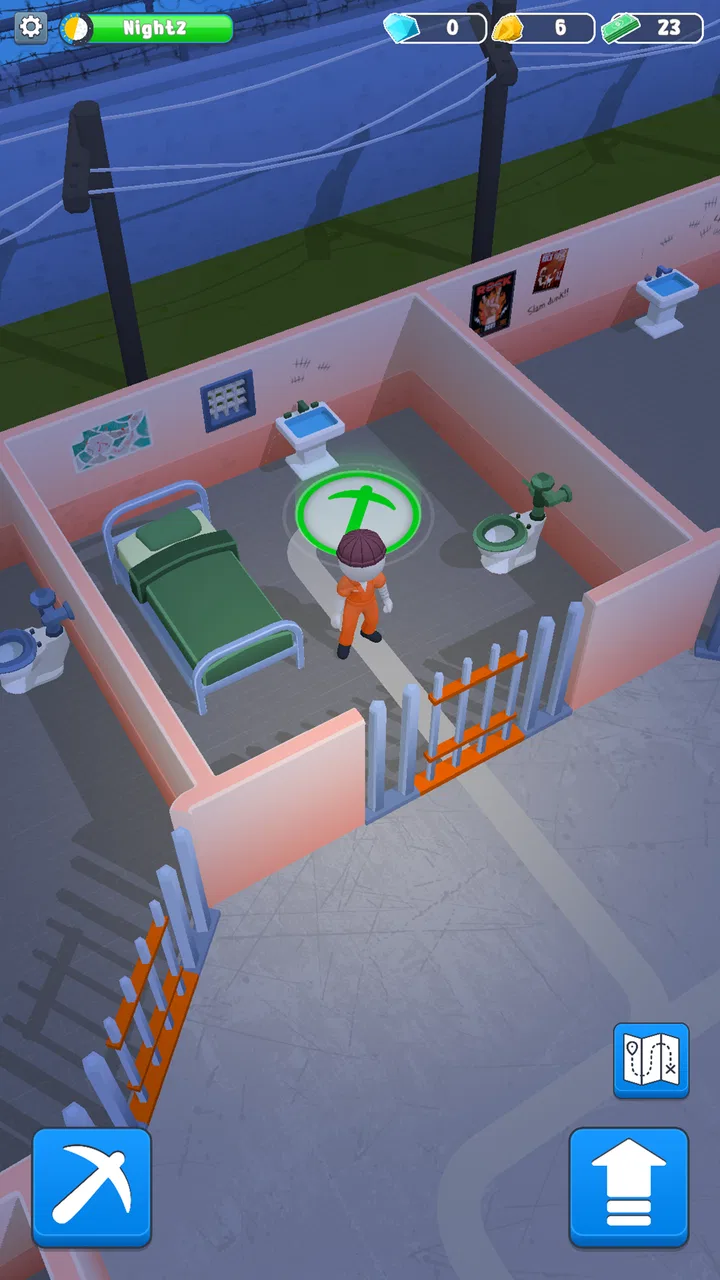
Prison Breakout is a role-playing game from Yamy Studio that puts the focus on escaping confinement through digging, planning, and careful decisions. I found its central idea easy to understand: you are not simply moving from one fight to the next, but working toward freedom while managing the risks that come with a prison escape. That gives the game a more deliberate feel than a straightforward action title, even though the store summary presents it as a thrilling adventure.
The game is free to download, which makes trying it fairly simple. It is aimed at Teen players, runs on Android 8.0 or later, and includes optional in-app purchases ranging from $0.99 to $39.99 per item. That combination matters when judging its value: you can begin without paying, but players who dislike purchase prompts or spending pressure should approach it with realistic expectations.
Digging into the escape-focused role-playing design
What interested me most is the way Prison Breakout frames progress around escape preparation rather than treating the prison as a decorative setting. Digging suggests a hands-on route through the environment, while planning implies that timing and choices are part of the challenge. The result is a game that asks me to think about the next step instead of rushing forward automatically.
You May Also Like

 Blood Strike: 2.5 Anniversary
Blood Strike’s Loadouts Turn Every Drop Into a Tactical Gamble
A close look at Blood Strike’s custom loadouts: how fast access to signature weapons reshapes its battle royale rhythm, rewards preparation, and narrows the gap between fights.

 Pandora - Music & Podcasts
Pandora’s Music Is Easy to Start, but Harder to Recover
Pandora’s strength is its low-effort path from a seed to a station. Its weak spot is how much confidence it asks you to place in connection, setup, and quiet recovery.

 8 Ball Pool
 Is Built on Rivalries, Rematches, and Routine
A close look at the rivalries, rematches, shared routines, and unanswered safety questions that turn a quick pool match into a persistent mobile community.

 Samsung Music
’s Quiet Strength Is Playing What You Already Own
Its reach comes less from spectacle than from dependable access to a personal library. That simplicity is both the app’s strongest retention engine and its ceiling.

 AccuWeather: Weather Radar
AccuWeather Review: A Quick, Clear Forecast for Everyday Decisions
For everyday plans, the best forecast is the one you can understand quickly. AccuWeather makes rain timing, radar, and local conditions easy to act on, with a few trade-offs.

 Hill Climb Racing
Why Hill Climb Racing Still Turns Crashes Into One More Run
A tiny car, a bumpy hill and one more upgrade: Hill Climb Racing keeps resurfacing because its simple chaos makes every near-miss feel personal.
More From Our News Desk
View All News


I would describe the experience as a compact prison-break adventure with role-playing elements. That distinction is useful because it may not satisfy someone looking for a huge character-building game with a sprawling world. Its appeal is narrower and more focused: the fantasy of being trapped, finding a route out, and gradually turning a risky idea into a workable plan.
The basic loop is easy to imagine in everyday play. I might open the game during a short break, decide what part of the escape deserves attention, and stop after making progress toward a safer route. That kind of structure suits players who enjoy small strategic decisions. It is less suitable for someone who wants a purely relaxing game where every action succeeds on the first attempt.
One useful way to approach the game is to treat every new section as a planning problem rather than a race. Before committing to a route, I would look at what the current objective appears to demand, consider whether a quick gain could create a later obstacle, and avoid spending resources simply because they are available. Patience is more valuable here than constant movement.
How the prison setting affects the experience
The prison setting gives the game a clear identity. Many role-playing games rely on fantasy kingdoms, science-fiction stations, or modern battlefields, while this one builds its tension around confinement and the possibility of getting caught. That makes the goal immediately understandable even before the deeper systems become familiar.
It also creates a natural reason for cautious play. In a typical action game, charging ahead can be entertaining because the main reward is momentum. In a breakout scenario, hesitation can feel meaningful. I found that this premise encourages me to think about risk, concealment, and the order in which I handle problems, even when I am only playing for a few minutes.
The trade-off is that the setting may feel restrictive to players who want constant variety. A prison escape has a strong theme, but it does not offer the same imaginative range as a game that moves between many regions and genres. If the idea of repeatedly solving problems inside a controlled environment does not appeal to you, the core concept may wear thin sooner than it would for a dedicated strategy fan.
What the free entry point really means
Because the game is free, I can recommend installing it as a low-commitment trial rather than presenting it as a purchase decision from the start. There is no upfront price to weigh against the premise. That is particularly helpful for players who are unsure whether a prison-escape role-playing game will hold their attention.
The important qualification is the presence of optional purchases. Individual items cost from $0.99 to $39.99, so the range stretches from a small convenience purchase to a much more serious expense. I would not spend immediately. I would first learn whether the normal progression feels satisfying, then decide whether a purchase solves a genuine frustration or merely speeds up something I could enjoy earning through play.
That approach protects the value of the free version. If I can enjoy the planning and escape atmosphere without paying, the game has already delivered a worthwhile trial. If I feel that progress becomes unpleasant unless I buy something, that changes my assessment completely. A free download is not automatically good value; the real question is whether the unpaid experience remains enjoyable on its own.
For parents and younger players, the Teen rating is also relevant. I would check the game personally before handing it to a child, especially because the rating signals that its themes or presentation may not be intended for everyone. The rating does not make the game unsuitable for adults, but it does make it a poor choice for very young players who are better served by gentler puzzle or adventure games.
Small decisions that improve the way I play
My first practical tip is to avoid treating digging as an automatic answer to every obstacle. The obvious route is not always the most useful one in a planning game. I would pause and ask what the dig is meant to accomplish: opening access, creating an escape option, or simply advancing the current task. That question helps prevent wasted effort and makes each action feel connected to the larger breakout.
My second tip is to separate experimentation from commitment. When I am testing how the game responds to a situation, I prefer to use a low-cost attempt or a safe opportunity rather than immediately spending a valuable item. This is especially important in a free-to-play game, where impatience can make optional purchases feel more tempting than they need to be.
My third tip is to play in focused sessions. Prison Breakout is easier to judge when I pay attention to the sequence of decisions instead of tapping through while distracted. A short session devoted to understanding the current escape problem can be more productive than a longer session where I make rushed choices and then blame the game for the consequences.
A fourth useful habit is to keep track of what caused a setback. If a plan fails, I would not simply repeat it faster. I would identify whether the problem came from poor timing, an incomplete route, or spending attention on the wrong objective. That turns failure into information and is one of the main reasons the game can appeal to role-playing players who enjoy learning through trial and error.
Where it stands beside other role-playing games
Compared with a conventional role-playing game, Prison Breakout appears more focused on a single high-pressure fantasy: escaping confinement. It is therefore a better match for someone who wants a clear objective and a distinctive setting than for someone seeking a broad world full of unrelated quests. The prison theme gives it a sharper personality than a generic progression game.
Compared with a pure puzzle title, it offers a stronger sense of character and purpose. I am not solving isolated brainteasers with no context; I am working toward freedom. That framing can make ordinary decisions feel more urgent. On the other hand, a dedicated puzzle game may be preferable if I care more about clean logic challenges than role-playing atmosphere.
Compared with an action-heavy escape game, this one is more appealing when I want to plan. Players who expect nonstop chases or immediate combat may find the deliberate approach slower. I would choose Prison Breakout for the escape scenario and decision-making, not because it promises the broadest action experience in the category.
The game has also benefited from reaching a sizeable audience. It has passed one million installs and holds a 4.3 average from around thirteen thousand ratings, with 268 written reviews. Those figures suggest that the concept has found a real audience, although popularity alone does not guarantee that its pacing or purchase structure will suit me personally.
Who will get the most from it
I think the best audience is made up of players who enjoy contained settings, gradual progress, and the feeling of solving an escape route. If I like games where the objective is obvious but the path is not, the prison premise gives me a strong reason to keep experimenting. It is also a sensible option for anyone who wants a free role-playing game to sample without committing to an upfront purchase.
It works particularly well for short, attentive sessions. Imagine having a commute or a quiet evening with only a little time available: I could enter the game, review the current problem, make a few deliberate decisions, and leave after reaching a useful checkpoint in my thinking. That is more satisfying than a game that requires a long uninterrupted session before anything meaningful happens.
I would be more cautious about recommending it to players who want deep social systems, a large open world, or a highly flexible character journey. The prison-break premise is its strength, but it also sets boundaries around the experience. Someone looking for a broad role-playing sandbox should compare it with a larger alternative before settling here.
I would also suggest skipping it if optional spending is a major concern and even the possibility of purchase pressure reduces your enjoyment. Since the game includes items priced as high as $39.99, I would set a personal spending limit before playing. That simple step keeps the free entry point from turning into an impulsive decision after a difficult section.
Version, support, and practical expectations
The current version is 2.5.3, and the game was released on October 4, 2024. Those details help place it as a relatively recent mobile release rather than an old role-playing title being rediscovered years later. On Android, the minimum requirement is version 8.0, so players using older devices should check compatibility before planning around it.
I would not judge the game only by its first few minutes. Escape-focused games often become more interesting once I understand how their objectives connect. At the same time, I would not force myself to continue if the basic rhythm feels tedious. The central loop is visible early: digging, planning, and working toward freedom. If that combination does not appeal to me, extra time is unlikely to change the fundamental match.
One practical question is whether it is suitable for casual players. My answer is yes, provided casual means occasional play rather than completely mindless play. I can approach it in short sessions, but the game is more rewarding when I remember what I was trying to accomplish. Players who want something they can play with no attention at all should choose a simpler alternative.
Another question is whether it is worth paying for. My answer is conditional: I would pay only after confirming that the free experience is enjoyable and that a purchase provides a convenience I genuinely want. The available price range is too wide for me to call every item good value automatically. Free access makes the trial worthwhile; paid value depends on my own tolerance for waiting, repeating, or taking a more careful route.
My recommendation after weighing the trade-offs
After spending time with it, I see Prison Breakout as a focused role-playing game with a memorable premise rather than an all-purpose mobile adventure. Yamy Studio has chosen a setting that naturally supports cautious decisions, and that gives the game a clear identity. I like that the goal is easy to understand while the route toward it encourages planning instead of pure speed.
Its limitations are equally clear. The confined theme will not provide the variety of a large fantasy role-playing game, and the optional purchase range means I would play with a budget in mind. The Teen rating also makes it something I would select for older players rather than for children. Those are not automatic deal-breakers, but they should shape expectations before installation.
For me, the strongest reason to try it is the combination of a free starting point and a specific escape fantasy. I can test the core experience without paying, learn whether the decisions feel satisfying, and stop if the pacing is not right. I would recommend it to a friend who enjoys planning routes, learning from failed attempts, and playing in short but focused sessions.
My verdict: try it for free if the idea of planning a prison escape genuinely appeals to you, but do not treat purchases as part of the admission price. Players seeking a broad, action-packed role-playing world should look elsewhere, while fans of contained strategy and escape scenarios may find enough tension and purpose here to make the download worthwhile.
FAQs for Prison Breakout!
01What is the main objective of Prison Breakout!?
Prison Breakout! is an action-packed puzzle game where players assume the role of a prisoner planning a daring escape. The game challenges players to navigate through complex levels, avoid guards, and solve intricate puzzles to successfully break out of prison. Each level increases in difficulty, requiring strategic thinking and quick reflexes.
02What platforms is Prison Breakout! available on?
Prison Breakout! is available on both Android and iOS devices. Players can download the game from the Google Play Store or the Apple App Store. It’s optimized for smartphones and tablets, ensuring a smooth gaming experience across different screen sizes and resolutions.
03Does Prison Breakout! require an internet connection to play?
Prison Breakout! can be played offline, allowing users to enjoy the game without needing an active internet connection. However, certain features, such as in-game purchases and leaderboards, require connectivity to function. This flexibility makes the game an excellent option for playing on the go.
04Are there any in-app purchases in Prison Breakout!?
Yes, Prison Breakout! includes in-app purchases that allow players to enhance their gaming experience. These purchases might include additional levels, power-ups, or cosmetic items. While these are optional, they can provide an advantage or extend gameplay for those interested in exploring more content.
05Is Prison Breakout! suitable for all age groups?
Prison Breakout! is rated for ages 12 and up due to its mild violence and strategic content. It’s designed to be challenging and engaging, appealing to both teenagers and adults. Parents should review the game’s content and settings to ensure it aligns with their expectations for younger players.
Pros
- Smooth and intuitive controls for easy gameplay.
- Engaging storyline with unexpected twists.
- Challenging puzzles that enhance critical thinking.
- High-quality graphics for an immersive experience.
- Regular updates with new levels and challenges.
Cons
- Occasional in-app ads can disrupt gameplay.
- Requires a constant internet connection.
- Limited customization options for characters.
- Some levels may be too difficult for beginners.
- In-app purchases can be costly for progression.

Prison Breakout!
Gallery